What Delhi NCR Households Should Know About Cockroach Infestation
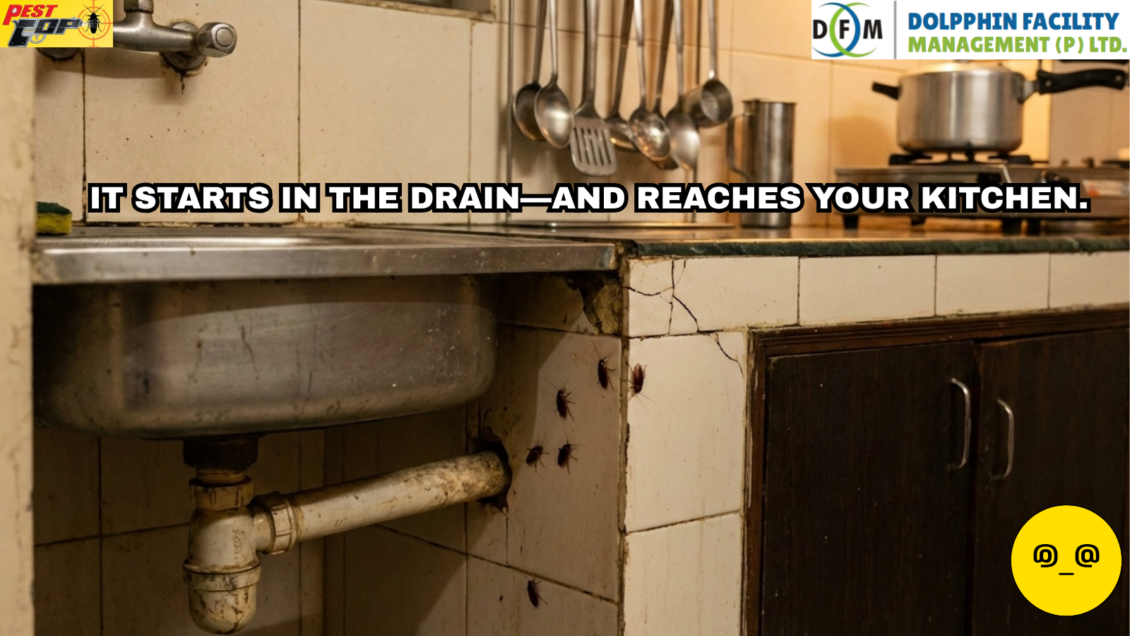
Cockroach infestation in homes is a structural reality connected to the construction and use of urban residences throughout Delhi NCR, not a sporadic annoyance. Sightings frequently start in kitchens or bathrooms and gradually move to storage areas, cupboards, and living areas in both individual floors and high-rise flats. The existence of hidden access points that continue to function regardless of surface hygiene is what causes this problem to persist rather than a lack of cleanliness.
For many households, the issue only becomes apparent when activity picks up, which is frequently late at night. By then, the infestation has already taken root in interior areas that are seldom examined or cleaned.
Why This Problem Is Common in Delhi NCR's Urban Homes
Delhi NCR’s contemporary home designs mostly rely on tightly fitted interiors, hidden conduits, and shared drainage systems. In addition to creating uninterrupted interior passageways that facilitate transit between floors and adjacent units, these designs also enhance aesthetics and space efficiency. Untreated drain lines, pipe couplings, and wall cavities can cause problems for even recently built buildings.
Areas Connected to Drains as Main Entry Points
Because they are connected to internal drainage lines, kitchen sinks and bathroom floor traps are always wet. Particularly when combined with food leftovers and warmth, these factors provide perfect conditions for refuge and mobility. This explains why activity is most frequently observed at night, when households are peaceful and undisturbed.
How Kitchens Eventually Turn Into High-Risk Areas
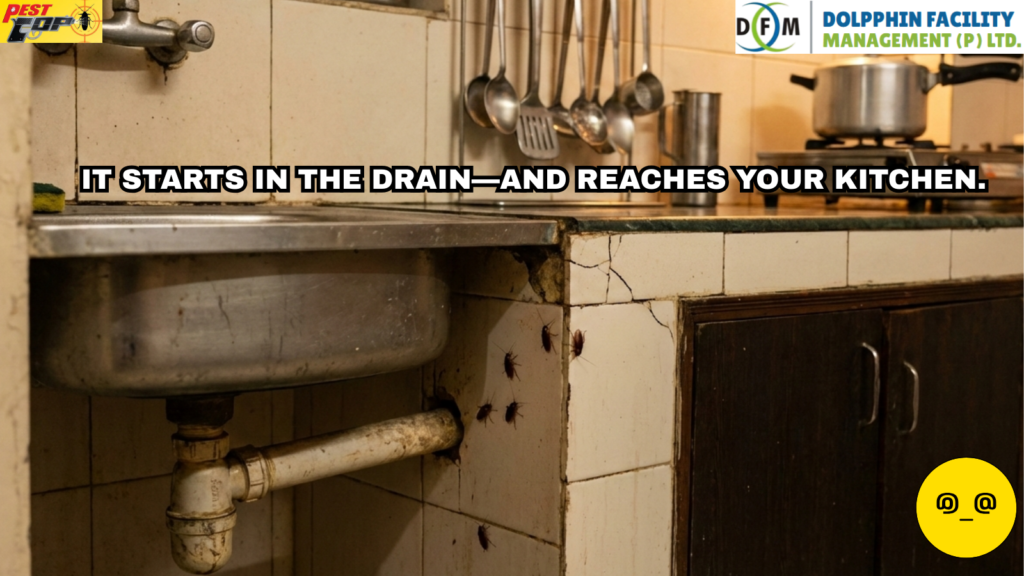
Because they provide access to food, water, and warmth, kitchens naturally draw activity. Once inside, mobility includes counters, shelves, cutlery, and storage bins in addition to sinks. This eventually results in poor hygiene and increasing discomfort when using the kitchen on a daily basis.
The Ignored Places That Allow Silent Spread
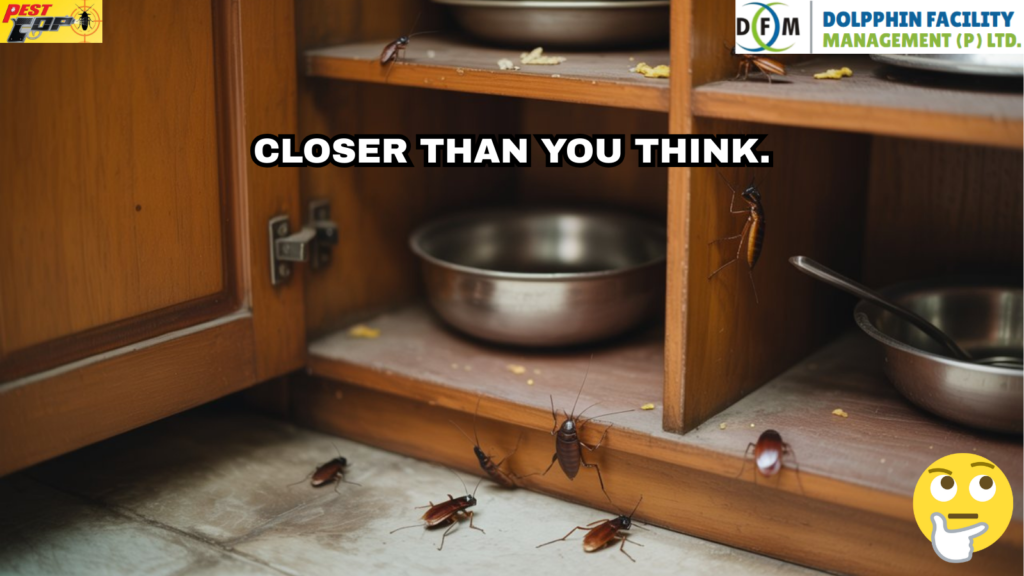
Kitchens receive prompt treatment, but infestations never stay in one place. Wooden furniture, shoe racks, wardrobes, and storage cabinets frequently turn into secondary zones. Because fewer people visit these areas, activity might go on unannounced.
Restrooms and Hidden Gaps
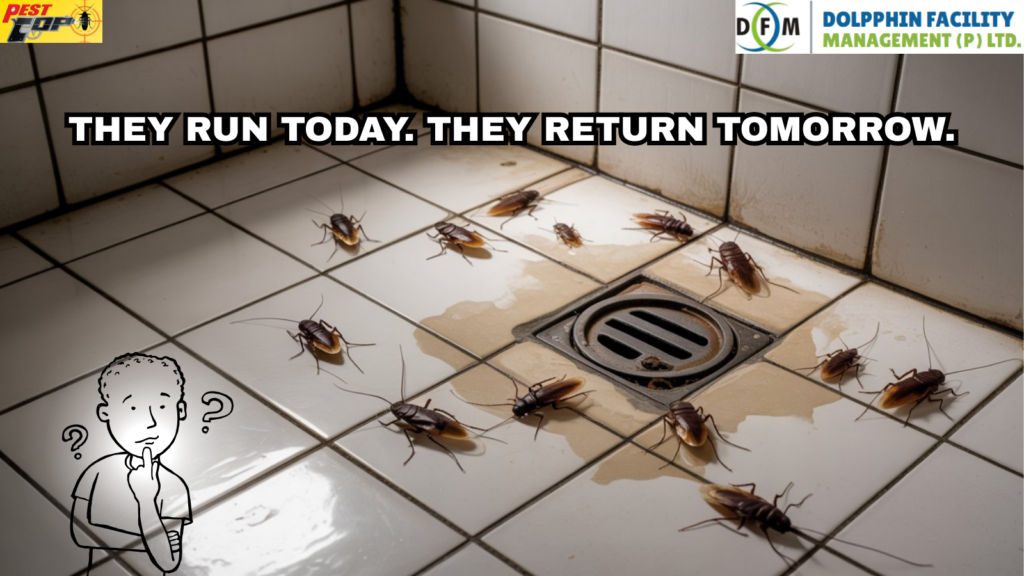
Secondary access points are restrooms that are linked to shared drainage networks. Floor traps, pipe apertures, and hidden wall gaps—a distinguishing characteristic of Delhi NCR residential infrastructure—maintain moisture throughout the day, especially in multi-story buildings.
Why Take Short-Term Actions Provide Immediate Outcomes
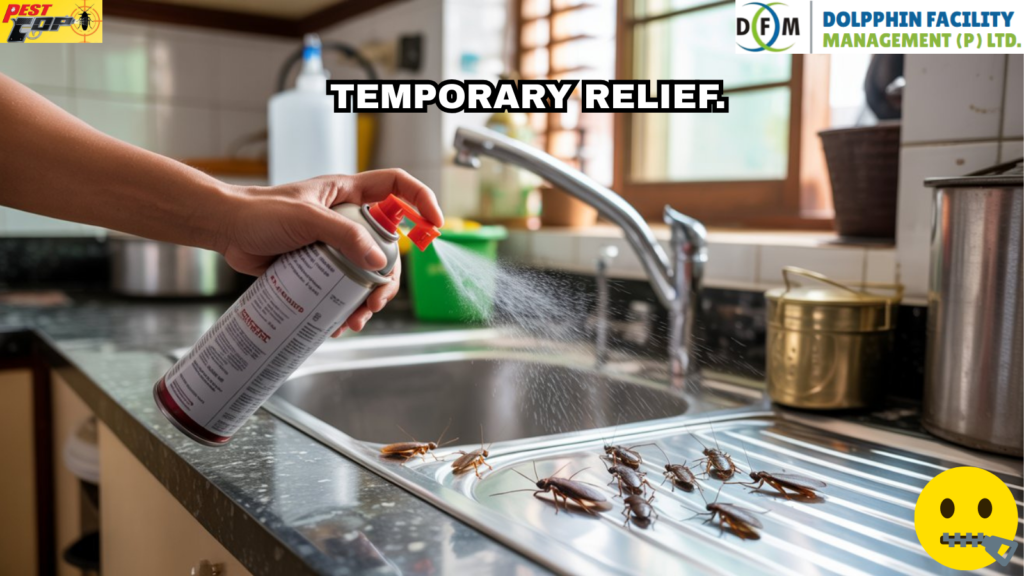
The majority of homes react to sightings with hasty, superficial fixes. These techniques do not address interior nesting zones or entry paths, even though they might momentarily lessen visual activity. As a result, activity resumes, frequently with more scope than previously.
Comprehending Source-Based Control
Focusing on the cause rather than the symptoms is necessary for effective control. This entails addressing concealed resting places, drainage connections, and internal cavities—a strategy that cannot be accomplished by surface treatment alone.
The Effect on Daily Life
Cockroach infestations in homes have an impact on tenants’ perceptions of their own environments in addition to hygienic issues. Moving around at night causes persistent discomfort, storage spaces become uncomfortable to use, and kitchens become unreliable. Even well-kept homes eventually start to feel compromised.
Infrastructure, access points, and the shortcomings of surface-level solutions are the real problems here, not carelessness.
An Organized, Long-Term View
Considering the home as a networked system leads to sustainable control. To interfere with internal movement and breeding cycles, storage units, kitchens, restrooms, and hidden cavities must be addressed collectively. This integrated strategy becomes crucial in an area like Delhi NCR, where dense residential layouts and shared plumbing are typical.

Conclusion
A larger issue related to shared infrastructure and urban living is shown by cockroach infestation in homes in Delhi NCR. The first step to a meaningful resolution is to comprehend the structural basis of the problem. Rather than depending on recurrent short-term fixes, long-term outcomes depend on resolving internal access points and hidden zones.
This knowledge serves as the cornerstone of Dolpphin Facility Management’s (DFM) strategy. With expertise in residential settings in Delhi NCR, DFM concentrates on organized, source-based solutions intended for long-term efficacy—assisting households in maintaining clean, comfortable living spaces without frequent disruption.
FAQs
Indeed. Internal moisture, temperature, and secret access points are not eliminated by clean surfaces. No matter how clean the surface is, drain lines, hidden gaps, and closed storage compartments continue to function.
Throughout the day, drain connections stay warm and moist. Particularly in houses connected by shared drainage systems, these circumstances permit flow from internal pipelines into residential areas.
Only what is visible is affected by sprays. Cabinets, wall cavities, and drain interiors are examples of hidden regions that are left untreated, making it possible for the problem to resurface when the surface effect wears off.